
Prepare to be transported back in time to a realm of passion, intrigue, and enduring legend! The historic Óbidos Medieval Market (Mercado Medieval Óbidos) is once again opening its ancient gates, and this year, it delves deep into one of Portugal’s most poignant love stories: that of Dom Pedro and Dona Inês de Castro.
Óbidos Medieval Market: A Journey Through Love, Legend, and Living History
Nestled within its ancient, venerable walls, the “Vila das Rainhas” (Village of Queens) – Óbidos – plays host to an extraordinary event where history comes alive. This year’s theme, “Pedro e Inês,” invites visitors to immerse themselves in a tale that transcends time, a story of forbidden love that conquers even death itself.
The Heart of the Story: Pedro and Inês
The forbidden romance between D. Pedro, Infante of Portugal, and Dona Inês de Castro, a noble lady of Galician lineage, is celebrated as one of the most remarkable love stories in the history of the Kingdom. Their passion, intertwined with political intrigue and destiny, shook the royal court in the mid-14th century.
It all began around 1340 when Dona Inês arrived at court as a lady-in-waiting to Princess Constança Manuel, D. Pedro’s wife. Pedro was captivated by her beauty, gentleness, and grace, sparking a love as vivid as it was dangerous. This affection caused great fear among the nobles and King D. Afonso’s advisors, primarily because Inês was of Castilian blood and her brothers were powerful lords in Galicia. By royal command, Inês was exiled until Dona Constança’s death.
Freed from his marriage, D. Pedro sought to marry Dona Inês, and they had children, forming a union many considered a threat to the Kingdom’s sovereignty. Driven by reasons of state and fearing conspiracies, King D. Afonso IV cruelly sentenced Dona Inês to death, which was carried out by the sword in the gardens of her residence in Coimbra. The monarch believed that her death would end the scandal and extinguish their love.
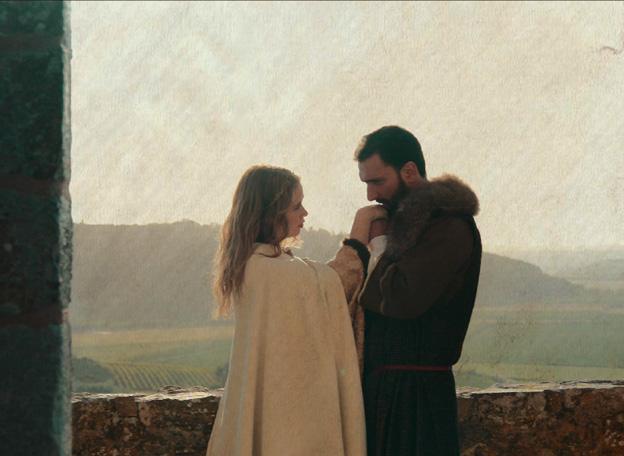
However, D. Pedro, a prince of ardent spirit and loyal heart, did not forgive. He rose in arms against his own father, and after his father’s death and his own ascension to the throne, he relentlessly sought vengeance for his beloved. It is recounted that he not only sought justice against her killers, but also ordered her body to be exhumed and, before the entire court, placed her on the throne, demanding that everyone kiss her hand as the legitimate queen she was in life and death. This legendary act solidified her status as “a Rainha coroada depois da morte” (the Queen crowned after death).
What to Expect at the Óbidos Medieval Market
The market transforms Óbidos into a vibrant hub of medieval life, bursting with energy and activities:
Bustling Marketplace:
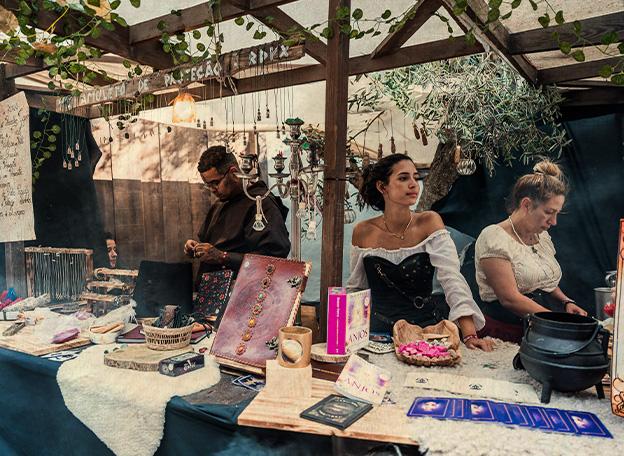
Óbidos becomes a prime location for trade, where merchants, artisans, and peddlers (“regatões”) loudly proclaim their wares from dawn till dusk. The market is a whirlwind of colors, aromas, and sounds, with the pungent scent of spices mingling with roasted meats, fine fabrics fluttering, and the shine of steel glinting under the sun.
Feasting and Revelry:
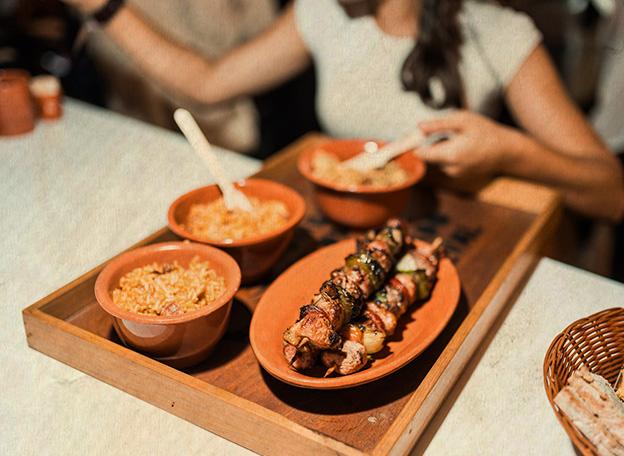
Abundant tables overflow with succulent meats, fresh fish, rustic breads, and various appetizers. Cups are continuously filled with beer and wine, inviting revelers to satisfy their hunger and thirst so the festivities can last until dawn. Taverns (“Tabernas”) resonate with music, dances, and spectacles.
Entertainment Galore:
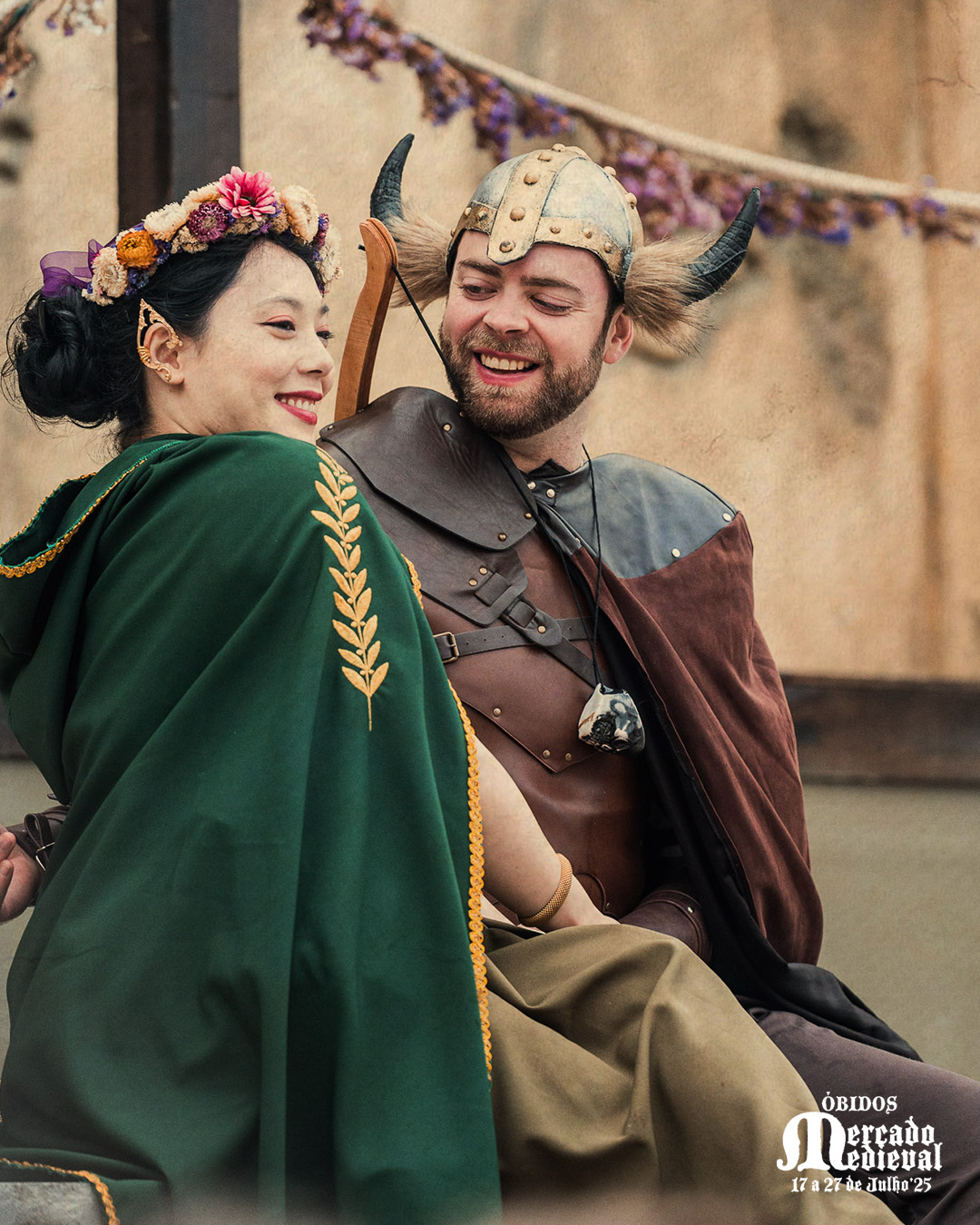
The market is alive with music, dances, and shows that marvel the crowd. Minstrels (“jograis”) and acrobats (“saltimbancos”) spread joy and enchantment throughout the streets.
Themed Attractions and Performances:
Abadia das Lágrimas (Abbey of Tears): This abbey, initially a sacred retreat for prayers for Inês’s soul, now hosts bands of minstrels and jesters who disrupt the peace with music and theatrical acts.
Julgamento (Judgment): A powerful performance reflecting D. Pedro’s profound sorrow and fierce desire for vengeance after Inês’s death.

Cortejo Noturno (Night Procession) – “Pelo Rei e Pela Grei!”: A somber and moving nightly procession depicting the final journey of Inês’s body to its resting place, a path once filled with joy now transformed into a dark, sinister route.
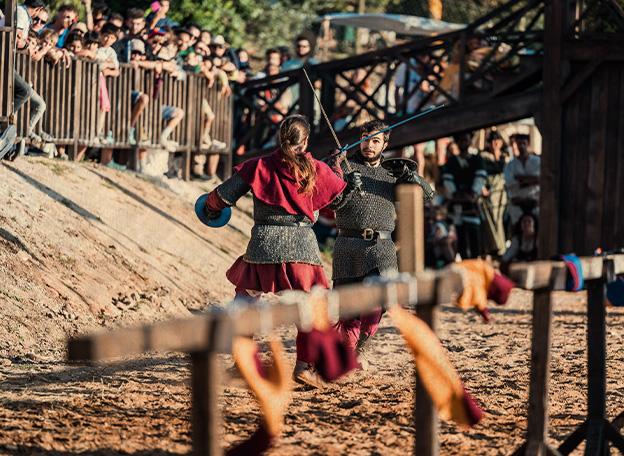
Torneio (Tournament) – “A Ferro e Fogo”: Witness thrilling combat as knights and men-at-arms engage in a tournament to prove truth and honor. This particular tournament centers on D. Teresa, a court lady accused of being D. Pedro’s lover, who seeks to defend her innocence.
Praça dos Desejos (Square of Desires): A place of jubilation and clamor, where wishes are celebrated and hope is renewed. The “Fonte dos Amores” (Fountain of Loves) serves as a romantic spot for lovers to exchange eternal promises.
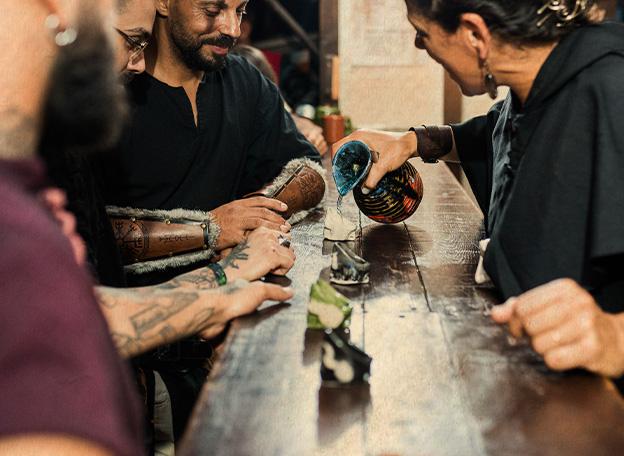
Alquimias (Alchemies): Step into a veiled workshop where masters of the occult manipulate essences, vapors, and elixirs. Visitors can sample strange potions, infusing taste with mystery.
Escriba d’El Rey (King’s Scribe): Discover the vital role of the scribe, responsible for recording texts, numerical data, drafting laws, and preserving secrets.
Óbidos, with its walls guarding memories of lives, loves, and hope, welcomes visitors to a truly unique experience. Even in times of anguish, the market serves as a refuge where people find strength, joy, and unity, weaving together stories of impossible loves like that of D. Pedro and Dona Inês with the vibrant pulse of medieval life.
Don’t miss the chance to experience this immersive historical festival and witness the enduring legacy of a love story that time could not bury!
The locals, the “Obidenses,” offer a warm reception, celebrating pure and true love with acrobats, dances, and the rhythmic beat of drums.
Experience Óbidos and Nazaré with Us!
Want to delve deeper into the magic of Portugal? Óbidos is just one incredible stop on our popular full-day group tour that also takes you to the stunning coastal town of Nazaré, famous for its giant waves!



Comment (0)